
‹ Back to blog
HYCCO joins AIM-PLATES to accelerate the industrial deployment of PEM fuel cells in Europe
HYCCO is joining AIM-PLATES, a Horizon Europe collaborative project dedicated to accelerating the industrial deployment of PEM fuel cells across Europe.
The project addresses a central question for the hydrogen sector: how can promising technologies move from technical validation to reliable, scalable and cost-effective industrial production?
For hydrogen to become a viable solution at scale, performance alone is not enough. Components must be manufacturable, repeatable, durable, cost-efficient and ready to meet the constraints of real applications. AIM-PLATES was created to support this transition.
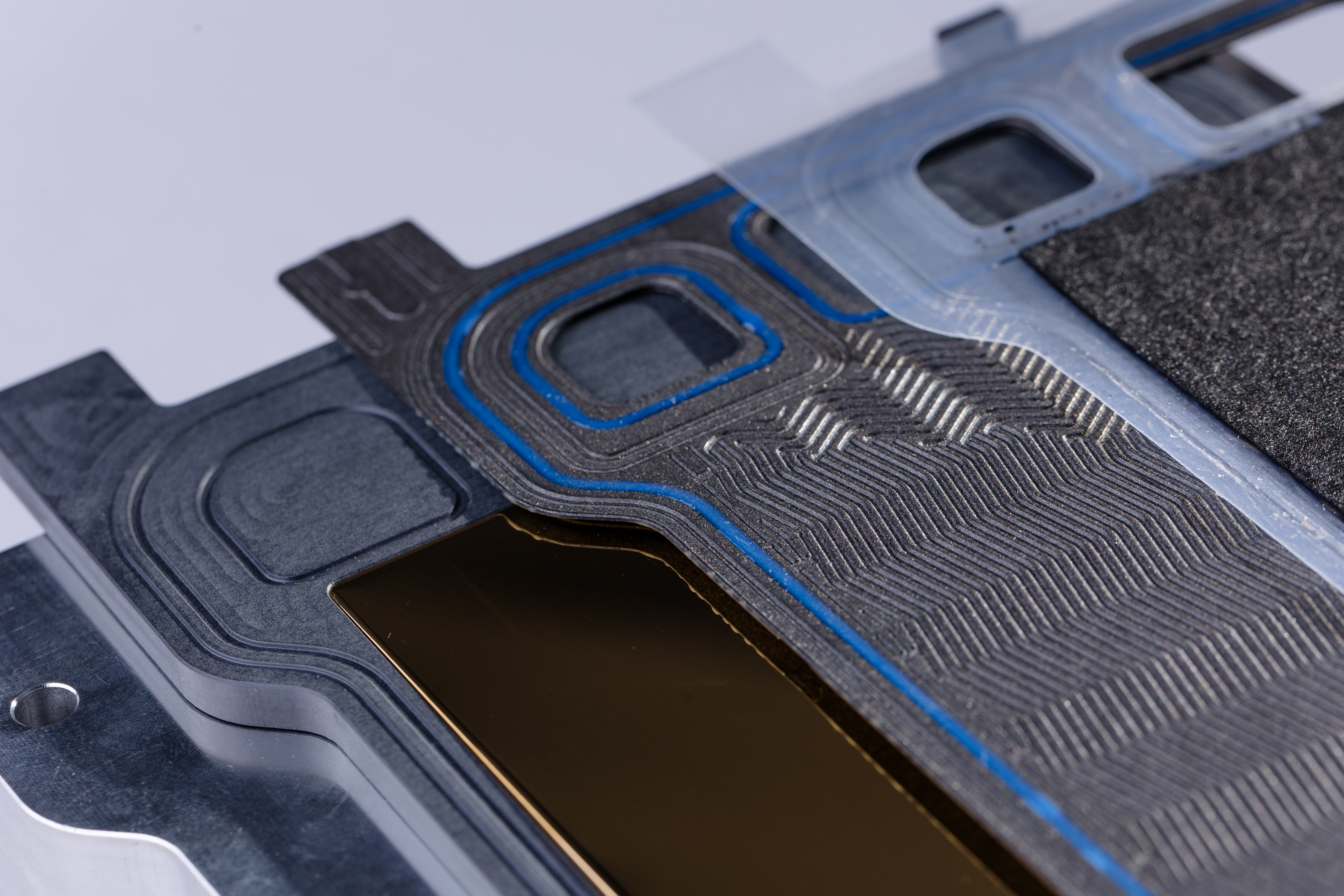
Bipolar plates : a strategic component for fuel cell deployment
In a fuel cell stack, bipolar plates are not secondary components. They play a structural and functional role by distributing gases, conducting electricity, managing heat and supporting the mechanical integrity of the stack.
Because of these multiple functions, bipolar plates have a direct impact on system weight, durability, power density, cost and manufacturability. They are therefore one of the key levers for making PEM fuel cells more competitive and easier to deploy at scale.
Today, many hydrogen systems still rely on metallic or graphite-based solutions. These materials can create limitations in terms of weight, corrosion resistance, cost, supply chain resilience and large-scale production. For Europe, this also raises broader industrial challenges around strategic autonomy, local manufacturing capacity and supply security.
AIM-PLATES directly addresses this bottleneck by focusing on next-generation composite bipolar plates designed for industrial reality.
Designing composite bipolar plates for industrial scale-up
The ambition of AIM-PLATES is not simply to demonstrate another prototype. The project is designed to help bridge the gap between innovation and industrial deployment.
Its work focuses on advanced composite bipolar plate solutions that combine performance, manufacturability and sustainability from the earliest design stages. This includes:
- ultra-thin, high-performance composite architectures;
- cost-efficient and circular material strategies;
- digitally controlled manufacturing processes;
- repeatable production from the first industrial runs;
- durability and quality requirements aligned with certification constraints.
The goal is clear: move from isolated technical validation to robust, repeatable and scalable production.
This approach is essential for demanding applications where fuel cell systems must meet strict expectations in terms of weight, reliability, integration and long-term performance. AIM-PLATES will therefore support validation in real-world industrial environments, particularly in aviation and automotive applications.
From validation to pilot production lines
AIM-PLATES brings together a European consortium of research, industrial and technology partners working toward a shared objective: building the production capabilities needed to scale composite bipolar plates for PEM fuel cells.
Over the course of the project, the consortium will work to:
- develop pilot production lines at TRL7;
- validate manufacturability and repeatability at scale;
- reduce the risks associated with industrial scale-up;
- support the transition from advanced materials to deployable components.
For the hydrogen sector, this step is decisive. Industrial deployment does not depend only on technical performance. It depends on the ability to produce components consistently, at the right cost, with the right level of quality and traceability.
AIM-PLATES is therefore focused on one of the most important challenges facing the sector today: turning breakthrough technologies into industrial capabilities.
What AIM-PLATES means for HYCCO
For HYCCO, joining AIM-PLATES marks an important step forward.
Since 2019, HYCCO has been developing and industrializing carbon-fibre composite bipolar plates designed to make hydrogen technologies lighter, more durable and more scalable. The company’s work is focused on a clear mission: making hydrogen technologies viable in real-world conditions.
AIM-PLATES strengthens this trajectory. It supports HYCCO’s transition from technology development and validation to industrial demonstration, scale-up and integration into complex systems.
This is fully aligned with HYCCO’s positioning: developing components that help remove key barriers to hydrogen adoption, from fuel cells to broader electrochemical systems.
Supporting Europe’s hydrogen industrial sovereignty
Beyond its technical objectives, AIM-PLATES contributes to a broader European ambition: building resilient, local and competitive value chains for hydrogen technologies.
By supporting the development of advanced composite bipolar plates, the project aims to help reduce dependency on imported components, improve the sustainability of production and strengthen Europe’s ability to deploy hydrogen technologies at industrial scale.
The technologies developed through AIM-PLATES could also open opportunities beyond PEM fuel cells, including electrolyzers and other net-zero electrochemical systems.
For HYCCO, this reflects a core conviction: the energy transition will not be delivered by ambition alone. It will depend on reliable components, scalable production and strong industrial collaboration.
Building the next generation of hydrogen technologies together
AIM-PLATES reflects a broader shift in the hydrogen sector.
The challenge is no longer only to innovate. It is to industrialize, scale and deliver.
By contributing to this European project, HYCCO is taking part in the development of the industrial capabilities needed to make hydrogen technologies more viable, competitive and deployable.
This is how hydrogen moves forward: through collaboration, engineering and execution at scale.